

Not enough time in the day? Not after reading this gem.
Have you ever reached the end of a busy day and wondered where all the hours went?
You may have worked, answered emails, dealt with errands, prepared meals, kept up with other people’s demands and somehow managed to fit in dozens of small tasks. Yet when you finally have a moment to yourself, you may still feel as though you haven’t really done the things that matter most to you.
 That problem isn’t new.
More than a century ago, Arnold Bennett wrote a small book about precisely this problem. Although the world he lived in was very different from ours, his observations about time, attention and the way we spend our lives remain remarkably relevant.
How To Live On 24 Hours A Day was first published in 1910 and was a major bestseller, as part of a larger work entitled “How To Live”.
Arnold Bennett has some great insights about using time wisely and puts forward proposals for getting more out of our time each day.
It is one of those books that sounds as though it should be hopelessly outdated. After all, we now live with smartphones, social media, streaming services, constant notifications and an extraordinary number of ways to fill every spare moment.
Yet that may actually make Bennett’s message even more relevant.
The technology has changed.
The fundamental problem hasn’t.
We still have only 24 hours in each day.
We have, and we have always had, all the time there is. -Arnold Bennett Share on XThe question is not really how to find more time. It is how to make better use of the time we already have.
It is an old book and some examples may not apply to you. Its philosophy definitely applies to everyone in the present day.
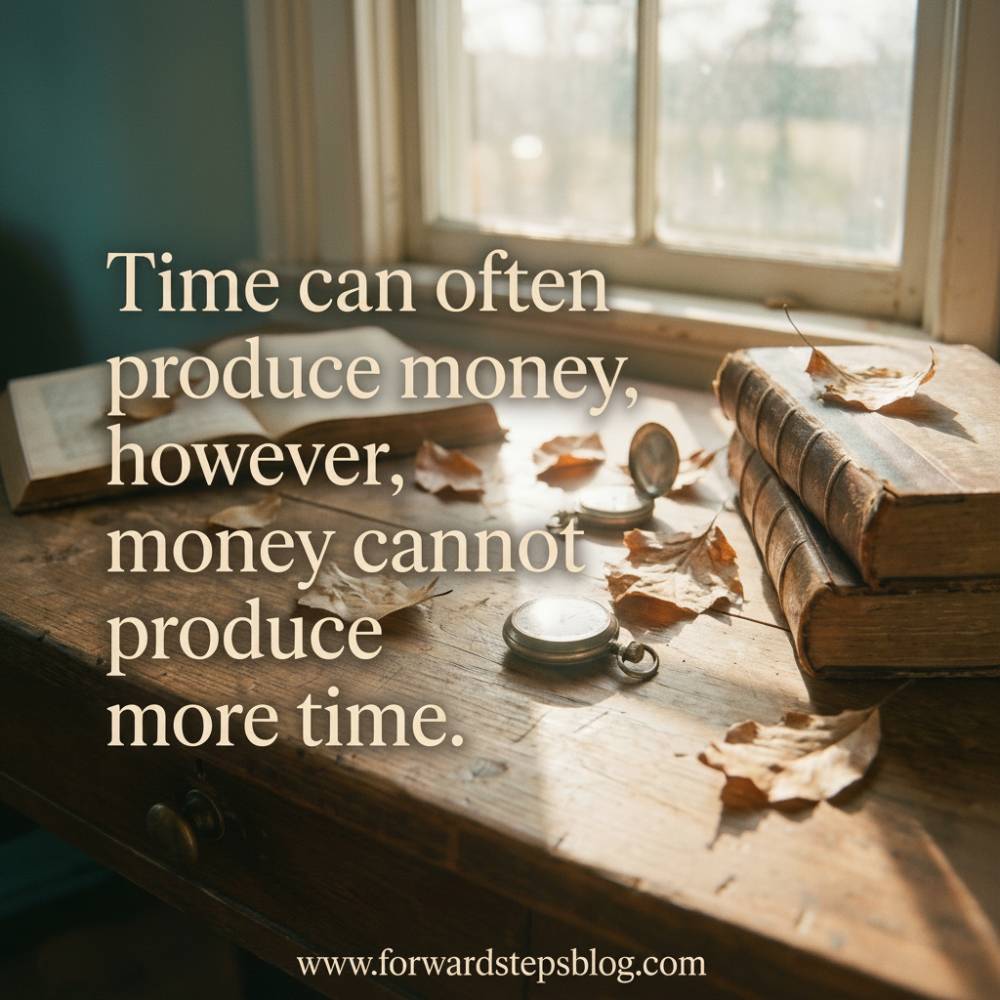
Bennett believed the old adage “time is money” understated the case. Time can often produce money, however, money cannot produce more time.
That is an important distinction.
Money can sometimes be replaced. Lost possessions can often be bought again. Opportunities can sometimes return.
Yesterday cannot.
Once an hour has passed, it is gone permanently.
Yet we often treat time as though there will always be more of it waiting for us tomorrow.
A brief excerpt from How To Live On 24 Hours A Day
“Which of us lives on twenty-four hours a day? And when I say “lives”, I do not mean exists, nor “muddles through”. Which of us is free from that uneasy feeling that the “great spending departments” of his daily life are not managed as they ought to be? […] Which of us is not saying to himself – which of us has not been saying to himself all his life: “I shall alter that when I have a little more time?” We never shall have any more time. We have and we have always had, all the time there is.”
 Collect your free ebook download of How To Live On 24 Hours A Day
In How To Live On 24 Hours A Day, Bennett addressed the large and growing number of white-collar workers that had accumulated since the advent of the Industrial Revolution.
In his view, these workers put in eight hours a day, 40 hours a week, at jobs they did not enjoy and at worst hated. They worked to make a living. However, their daily existence consisted of waking up, getting ready for work, working as little as possible during the work day, going home, unwinding, going to sleep and repeating the process the next day.
In short, he didn’t believe they were really living.
Does that paragraph from Wikipedia ring a bell with you?
If so, I think you will benefit from Arnold Bennett’s book very much.
Your time is your life
One of the most useful ways to think about Bennett’s message is to stop treating time as something separate from life.
Your life is made up of your time.
 Every hour you spend is an hour of your life.
That doesn’t mean every hour needs to be productive. Resting, relaxing, playing, daydreaming, talking with someone you love or simply doing nothing can all be worthwhile ways to spend time.
The point is to become more conscious of how you are spending it.
There is a big difference between choosing how to spend your time and simply allowing your time to be consumed by whatever happens to demand your attention.
Modern life makes the latter particularly easy.
You can open your phone for five minutes and discover an hour has disappeared. You can spend an entire evening moving from one small distraction to another without doing anything you actually wanted to do.
Then tomorrow arrives and you tell yourself you’ll get around to those important things when you have more time.
Bennett’s answer is wonderfully simple:
You aren’t going to get more time.
You already have the same 24 hours as everyone else.
The challenge is deciding what deserves a portion of them.
You don’t need to change your entire life
One of the appealing things about Bennett’s approach is that he isn’t suggesting you need to completely abandon your existing life and start again.
You still have work.
You still have responsibilities.
You still need to sleep, eat, shop, clean, travel and deal with the ordinary demands of living.
 What can change is what you do with the portions of time that are currently being overlooked.
Perhaps there is half an hour before work.
Perhaps there is an hour in the evening.
Perhaps your lunch break could occasionally be used for something meaningful to you.
Perhaps you could reclaim some of the time currently disappearing into distractions.
Small amounts of time can become surprisingly significant when used consistently.
Thirty minutes a day adds up to more than 182 hours over a year.
An hour a day adds up to 365 hours.
That is a lot of life.
The question is what you would like to do with it.
What would you do if you had more time?
This is where Bennett’s book can become more than an interesting piece of historical reading.
Instead of asking, “How can I find more time?”, perhaps ask:
“What would I do with the time I already have if I treated it as valuable?”
Would you read more?
Start giving greater importance to the hours you already possess. Share on XLearn something you’ve always wanted to learn?
Write?
Exercise?
Spend more time with someone you care about?
Work on a creative project?
Think about what you actually want from your life?
Simply create more space to enjoy being alive?
You don’t necessarily need another 24 hours.
You can read Arnold Bennett’s classic book for yourself and discover how many of his ideas still apply more than a century after they were written.
 Collect your free ebook download of How To Live On 24 Hours A Day
You may need to start giving greater importance to the hours you already possess.
If you have ever caught yourself saying, “I’ll do that when I have more time,” remember Bennett’s reminder:
We never shall have any more time.
We have today.
We have this hour.
We have this moment.
Perhaps the real secret to living on 24 hours a day isn’t learning how to squeeze more activities into those hours.
Perhaps it is learning how to make the hours you already have more truly your own.
Read How To Live On 24 Hours A Day
You can also read How To Live On 24 Hours A Day by Arnold Bennett here in the post:
How to Live on 24 Hours a Day by ForwardSteps

Hi, I'm Thea Westra at Forward Steps (forwardstepsblog.com)
CLICK HERE To Trigger More Of Those Forward Steps 'Aha' Light Bulb Moments!