

Below are a few inspiring Dr Suess quotes from “Oh, The Places You’ll Go!”
This book has wonderful life lessons too…
The Journey Is Yours
There is something rather wonderful about Oh, The Places You’ll Go!. Although it is often thought of as a children’s book, its message can speak to us at almost any stage of life.
Life is a journey filled with choices, unexpected turns, exciting possibilities and the occasional difficult stretch of road. We cannot always choose what happens next. We can, however, have a say in how we meet it.
Sometimes we need courage to take the next step. Sometimes we need patience when the road seems to be taking longer than expected. Sometimes we simply need to remember that being temporarily stuck does not mean we have reached the end of our journey.
Perhaps that is one of the reasons these words continue to resonate with people long after childhood. They remind us that there are still places we can go, things we can discover and directions we can choose.
March 2nd is Dr. Suess’ birthday (born 1904). His books never grow old! When I was a teacher I loved reading these to class, as well as Roald Dahl and Bill Peet books.
In celebration I thought I’d post in a video of “Oh, The Places You’ll Go!” by Dr. Suess (I also really love Horton Hears A Who and The Lorax). View the fun video, above.
“You’re off to Great Places! Today is your day! Your mountain is waiting, So… get on your way!”
“So be sure when you step, Step with care and great tact. And remember that life’s A Great Balancing Act. And will you succeed? Yes! You will, indeed! (98 and ¾ percent guaranteed) Kid, you’ll move mountains.”
“All alone! Whether you like it or not, alone is something you’ll be quite a lot!”
“You’ll get mixed up, of course, as you already know. You’ll get mixed up with many strange birds as you go. So be sure when you step. Step with care and great tact and remember that Life’s a Great Balancing Act. Just never forget to be dexterous and deft. And never mix up your right foot with your left.”
“Oh the places you’ll go! There is fun to be done! There are points to be scored. There are games to be won. And the magical things you can do with that ball will make you the winning-est winner of all.”
“Things may happen and often do to people as brainy and footsy as you.”
“Onward up many a frightening creek, though your arms may get sore and your sneakers may leak. Oh! The places you’ll go!”
“Congratulations! Today is your day. You’re off to Great Places! You’re off and away!”
“And when you’re alone there’s a very good chance you’ll meet things that scare you right out of your pants. There are some, down the road between hither and yon, that can scare you so much you won’t want to go on.”
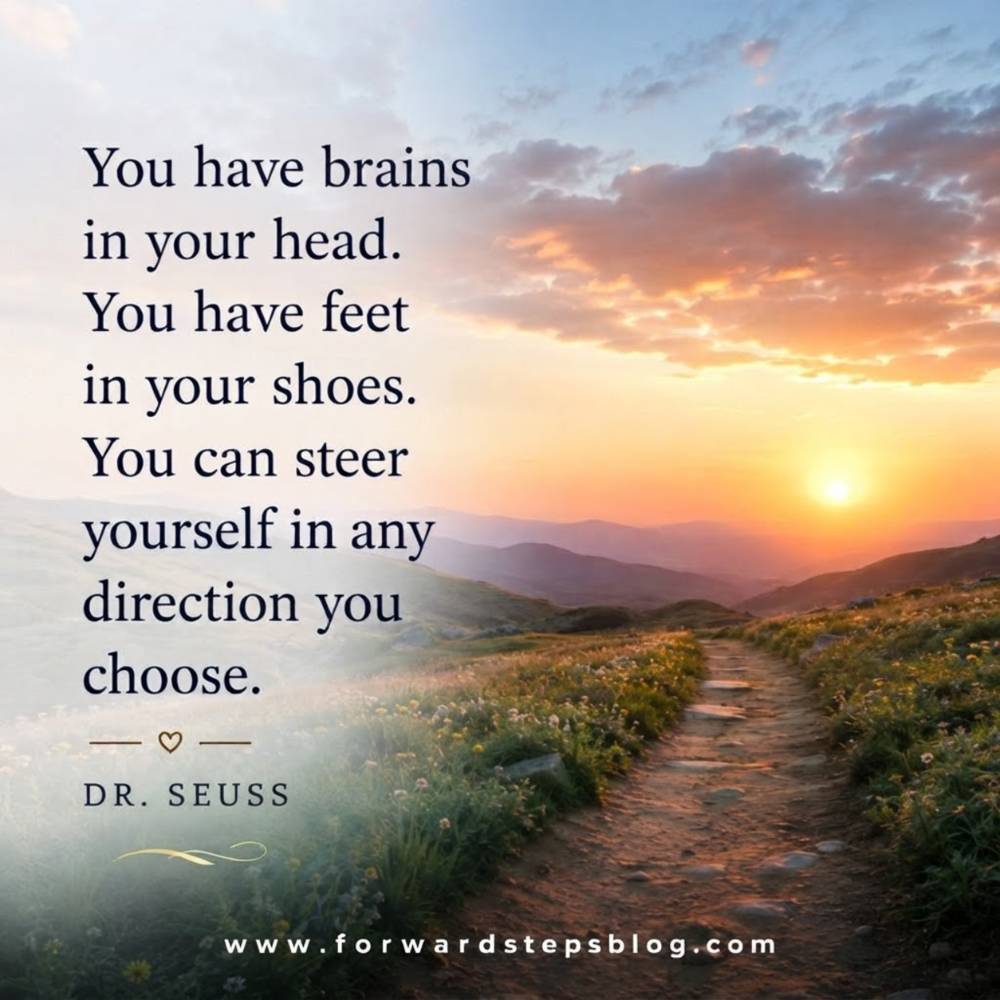
With your head full of brains and your shoes full of feet, you're too smart to go down any not-so-good street. Share on X“You have brains in your head. You have feet in your shoes. You can steer yourself any direction you choose. You’re on your own. And you know what you know. And YOU are the one who’ll decide where to go…”
What Oh, The Places You’ll Go! Can Remind Us About Life
Behind all the playful words and colourful imagery is a surprisingly practical message about living.
You don’t have to know the whole journey
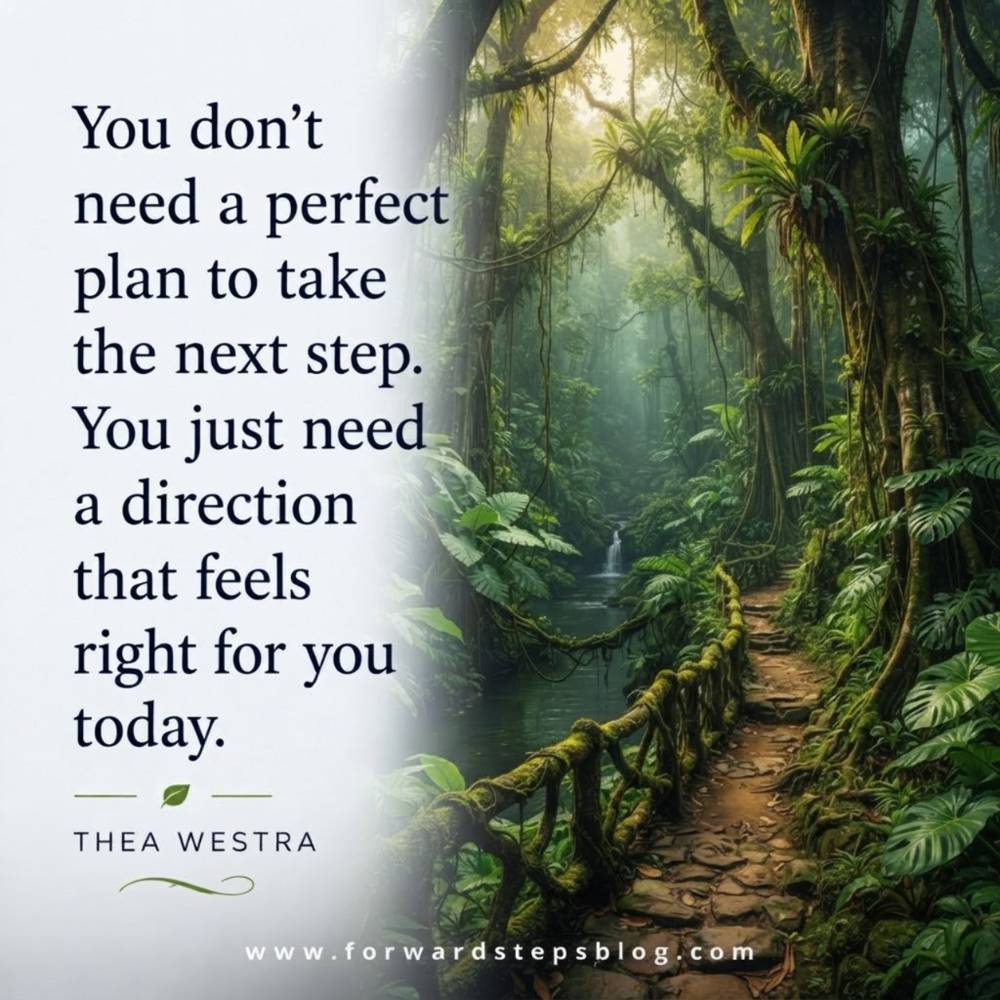
We can sometimes delay taking a step because we want to know exactly where that step will lead. Yet life rarely gives us the complete map in advance.
You may not know what the next year will bring. You may not even know what the next month will bring. That doesn’t mean you cannot make a good choice about what to do next.
You don’t need to see the entire road to take the next worthwhile step.
Some days will be easier than others
There will be days when everything seems to flow and days when nothing seems to go according to plan. There will be moments of confidence and moments when you wonder whether you are making any progress at all.
That is not necessarily a sign that you have chosen the wrong path. It may simply be part of being human.
A difficult stretch of road does not erase the progress you made before reaching it.
You have choices
One of the most empowering ideas in the book is the reminder that you have some influence over the direction of your life.
You cannot control every circumstance. You cannot control other people’s decisions. You cannot guarantee that everything will work out exactly as you hope.
You can still ask yourself, “What can I choose from here?”
Sometimes that question is enough to turn your attention away from everything you cannot change and towards the next thing you can do.
Being stuck doesn’t mean staying stuck
Most of us experience times when life seems to have lost its momentum. We can become comfortable with an unsatisfying routine, uncertain about what we really want or simply tired of trying.
When that happens, the answer does not have to be a dramatic life overhaul.
It might be one small change. One conversation. One decision. One new idea. One thing you’ve been putting off.
A small step is still a step.
There are still places you can go
Perhaps the most beautiful message to take from this book is that your story is not necessarily finished simply because one chapter has been difficult.
There may still be experiences you have not had, people you have not met, ideas you have not explored and possibilities you have not considered.
Wherever you happen to be today, there is still a next step available to you.
A small step to take today
If you could choose one direction for your life right now, what would you like to move towards?
Don’t worry about creating a five year plan. Don’t try to work out every detail. Just choose one area of life where you would like to see some movement.
Then ask yourself:
– What is one thing I would like to change?
– What is one thing I would like to experience?
– What is one thing I have been putting off?
– What is one small step I could take this week?
Your answer doesn’t have to be impressive. It simply needs to be meaningful to you.
Choose your next step. Then take it.
Explore This Idea Further
Optional prompts to help you make the ideas your own.
I use AI as a thinking companion, not as a replacement for my own thinking. These prompts are simply another way to explore the ideas in this article and see how they might apply to your own life.
You don’t have to use AI to benefit from them. You can copy a prompt into a notebook, write about it in your journal, talk it through with someone you trust or simply sit with the question and see what comes up for you. If you do use ChatGPT or another AI tool, treat its responses as a starting point for your own thinking. You remain the person who decides what is useful and right for your life.
How to use these prompts: Choose the one that appeals to you, copy the complete prompt and paste it into ChatGPT or another AI tool. You can answer its questions and continue the conversation as you go.
1. Apply This To My Life
Use this prompt when you want to connect the article’s ideas with something happening in your own life.
I’ve just read the Forward Steps article “Inspiring Dr Suess Quotes With Life Lessons.” Use that article as your primary source and foundation for this conversation. Help me discover how its life lessons about choosing my direction, taking the next step, dealing with difficult stretches of life and recognising that I can have a say in where I go could be useful in my own life.
Help me identify which of these ideas may be most relevant to my current circumstances, relationships, work, decisions or way of thinking. Ask me a few thoughtful questions first if you need more information about my situation. Then help me connect the article’s message to my life and understand why it might matter to me.
Stay grounded in the ideas actually presented in the Forward Steps article. Do not replace its message with generic self improvement advice or introduce unrelated theories or techniques.
Keep the conversation personal, practical and encouraging. Build on my answers rather than giving me one large response and stopping. Help me see what the article may be saying specifically to me and what I might take from it.
2. Reflect More Deeply
Use this prompt when you want to look more deeply at what the article’s message might mean for you.
I’ve just read the Forward Steps article “Inspiring Dr Suess Quotes With Life Lessons.” Use that article as your primary source and foundation for our reflection. Help me look more deeply at its ideas about life’s journey, choosing a direction, making choices, finding balance, facing difficult or uncertain stretches and continuing to move forward.
Rather than simply summarising the article, help me notice an insight, possibility, assumption or question I may have overlooked. Ask me thoughtful questions about where I am now, the direction I am choosing, how I respond when things become difficult and whether there is an idea in the article I need to see differently.
Keep the conversation grounded in what the article actually teaches. Do not turn it into a generic self improvement exercise or introduce unrelated theories or techniques. Encourage meaningful self reflection without becoming overly psychological or clinical.
Keep this conversational rather than turning it into a questionnaire. Respond thoughtfully to my answers, ask a useful follow up question when appropriate and help me uncover meaningful personal insights as we continue.
3. Turn It Into Action
Use this prompt when you want to turn one of the article’s life lessons into a practical next step.
I’ve just read the Forward Steps article “Inspiring Dr Suess Quotes With Life Lessons.” Use that article as your primary source and foundation for developing my next steps. Help me turn its most useful idea for me right now into one or two practical actions I can realistically take.
First help me decide which idea is most relevant to my life right now, particularly the article’s message about choosing my direction, taking the next worthwhile step, continuing through difficult stretches and recognising that I can decide where to go. Ask me a few relevant questions first if you need more information about my circumstances.
Then help me choose a small, realistic action that puts the idea into practice. Help me turn it into a simple plan rather than giving me a long list of things to do. Keep the focus on what I can realistically do next.
Stay grounded in the Forward Steps article and do not replace its message with generic self improvement advice or unrelated techniques. Encourage progress rather than perfection, and build on my answers as we continue.
Help me finish with one clear next step I can actually take.
Tip: You don’t have to use all three. Start with the one that feels most useful to you right now.

Hi, I'm Thea Westra at Forward Steps (forwardstepsblog.com)
CLICK HERE To Trigger More Of Those Forward Steps 'Aha' Light Bulb Moments!
