

Good habits are among the foundations of a successful and fulfilling life. The small things you repeatedly do each day may seem insignificant on their own, yet over time they can influence your health, relationships, confidence, productivity and sense of well-being.
Warren Buffett is often quoted as saying, “Bad habits are like chains that are too light to feel until they are too heavy to carry.”
The difficulty with habits is that their consequences are not always immediately obvious. A few minutes spent on a worthwhile activity may appear to make little difference, just as a small daily indulgence may seem harmless. However, repeated actions accumulate. What you practise regularly gradually becomes part of the way you live.
The encouraging news is that you don’t need to change everything at once. Small, consistent improvements can help you create a more positive direction for your life.
See the short video above, titled The Power of Habit from (ad) The Power of Habit by Charles Duhigg.
Recognise the Habits That Shape Your Life
What are your morning habits? What about your work habits, your relationships, the food you eat, the way you spend your money and the thoughts you return to throughout the day?
 Consider how you respond when you feel stressed, disappointed or tired. Do you take a short walk, talk things through with someone or make a practical plan? Or do you put things off, become unnecessarily critical of yourself or reach for distractions that leave you feeling worse?
Our habits extend far beyond visible actions. They also include familiar ways of thinking, emotional responses and the routines we follow without giving them much conscious attention.
Your life is influenced by the little things you repeatedly do. These patterns can either support the person you want to become or make it harder to move in the direction you desire.
The first step towards improvement is to notice what you are already doing. You cannot make informed changes to a pattern you haven’t recognised.
Try observing your daily routines for a few days without judging yourself. Notice which actions leave you feeling capable, calm and satisfied and which tend to create unnecessary stress or regret. This simple exercise can reveal where a small change might make the greatest difference.
You can also explore these practical ideas for developing better habits for personal growth.
Small Changes Can Produce Meaningful Results
Don’t underestimate the importance of your everyday habits. You don’t have to make dramatic changes or rely on a sudden burst of motivation to improve your life.
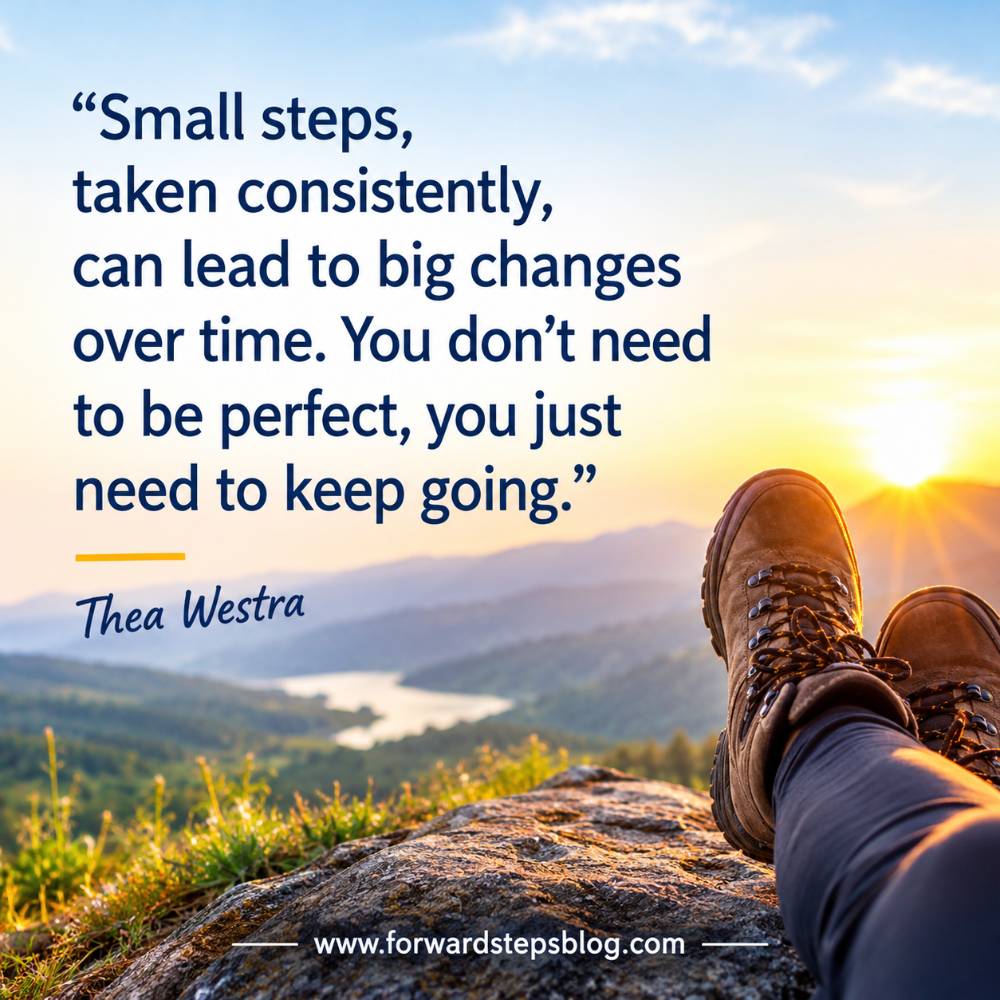
A small action, repeated consistently, can gradually become a valuable part of your routine.
For example, reading a few pages of an informative book each day can expand your knowledge over time. Preparing for the following morning before going to bed can make the start of your day less hurried. Spending a few minutes listening attentively to someone you care about can strengthen a relationship.
Likewise, putting a little money aside regularly, taking a short walk, practising a skill or writing down one thing you have learned can help you build progress in areas that matter to you.
Small actions, repeated consistently, can create meaningful changes in your life. Share on XThe individual action may seem modest, however the benefit comes from repeating it. Each time you follow through, you reinforce a pattern that makes the next attempt a little more familiar.
This doesn’t mean every small action will automatically lead to a major achievement. Circumstances, opportunities and challenges also influence our lives. However, useful habits increase the likelihood that you will keep making progress, even when conditions are less than ideal.
Choose one area of your life you would like to improve. Identify an action that takes five minutes or less and decide when you will do it. Make the first step so manageable that you have a reasonable chance of following through, even on a busy day.
Build Momentum by Starting Your Day Well
The way you begin your day can influence how you approach the hours that follow. A hurried, distracted morning may leave you feeling as though you are already behind, whereas a few purposeful actions can help you feel more organised and prepared.
This doesn’t mean you must wake up unusually early, follow a complicated morning routine or be productive every minute. Your ideal start will depend on your circumstances, responsibilities and personal preferences.
 Instead, consider establishing a few simple habits that help you begin with greater clarity.
You might drink a glass of water, open the curtains, stretch gently, review your priorities or spend a few minutes reading something encouraging. You could also decide on the one task that would make the day feel worthwhile if you completed it.
The purpose is to create a helpful starting point rather than another set of demands to meet.
It is also important to recognise that a good day doesn’t have to begin perfectly. If you wake up late, feel tired or face an unexpected problem, you can still take a positive next step. One difficult morning need not determine the direction of your entire day.
Performance momentum is often built through action rather than waiting until you feel motivated. Beginning a manageable task can make it easier to continue, while completing even a small commitment can give you a sense of progress.
Good Habits and Bad Habits Both Have a Cumulative Effect
“In truth, the only difference between those who have failed and those who have succeeded lies in the difference of their habits.
Good habits are the key to all success. Bad habits are the unlocked door to failure.
Thus, the first law I will obey, which precedeth all others is – I will form good habits and become their slave.” – (ad) Og Mandino
The underlying message is that repeated behaviour matters. Our routines can support our goals or they can gradually pull us away from them.
Consider the difference between regularly making time for a meaningful conversation and continually postponing it. Between setting aside money for a future need and spending without considering the consequences. Between approaching a challenge with curiosity and immediately assuming you cannot succeed.
Good habits are the key to all success. Bad habits are the unlocked door to failure. Share on XNone of these individual choices defines your entire life. However, when a pattern is repeated over months or years, its influence can become substantial.
It is worth remembering that an unhelpful habit is not a character flaw. People develop habits for many reasons, including convenience, stress, their environment and the immediate comfort or reward an action provides. Recognising these influences is more useful than criticising yourself.
Instead of asking, “Why am I so bad at this?” try asking, “What makes this behaviour easy to repeat and what could help me choose differently?”
That question moves you away from self-blame and towards practical problem-solving.
Understand What Triggers Your Habits
Many habits develop through repetition in familiar situations. A particular time, place, feeling or event can prompt an action that has become associated with it.
For example, you might automatically reach for your phone whenever you feel bored. You might snack whenever you sit down to watch television or postpone a difficult task whenever you feel uncertain about how to begin.
Once you recognise the pattern, you can experiment with changing one part of it.
Start by identifying three things:
– The trigger: What usually happens immediately before the habit?
– The behaviour: What do you typically do in response?
– The result: What do you gain from it or what consequence follows?
The immediate result is important. Some habits persist because they offer a quick reward, such as relief from discomfort, entertainment or a temporary escape from an unpleasant task. The longer-term consequences may be less appealing, however they can feel distant in the moment.
You don't have to change everything today. Just choose one better habit and begin. Share on XYou can use this understanding to make a more helpful response easier.
If you tend to become distracted while working, put your phone out of reach before starting. If you forget to take a short walk, connect it with an existing routine, such as the end of lunch. If you often postpone a task because it feels overwhelming, commit to working on it for just five minutes.
The goal is not to depend entirely on willpower. It is to make the action you want to take easier to begin and the action you want to reduce less automatic.
Keystone Habits Can Influence Other Areas of Your Life
“Some habits, say researchers, are more important than others because they have the power to start a chain reaction, shifting other patterns as they move through our lives.
Keystone habits influence how we work, eat, play, live, spend and communicate.
Keystone habits start a process that, over time, transforms everything.” – (ad) Charles Duhigg
The idea of keystone habits, explored by Charles Duhigg in (ad) The Power of Habit, offers a useful way to think about personal change.
 Some habits can support improvements in several areas at once. Regular physical activity, for example, may encourage you to pay more attention to your sleep, food choices and daily energy. Planning your week can help you manage your time, reduce last-minute stress and make room for relationships and recreation.
Keeping a journal might help you recognise recurring problems, clarify priorities and appreciate progress that would otherwise go unnoticed. Making time to prepare for the next day can also make it easier to follow through on other intentions.
The important point is that one helpful habit can sometimes make other beneficial behaviours easier. You may not need to tackle every problem separately if you can identify a routine that supports several of your goals.
However, what works as a keystone habit for one person may not have the same effect for another. Choose something relevant to your own circumstances rather than adopting a routine simply because someone else recommends it.
Ask yourself, “What one habit, if I practised it consistently, would make several other parts of my life easier?”
Write down your answer and consider how you could begin with a small, realistic version of that habit.
Make Good Habits Easier to Maintain
Understanding the value of a habit is one thing. Continuing to practise it when life becomes busy or motivation fades is another.
Rather than relying on enthusiasm alone, give your new habit a clear place in your daily routine.
1. Start smaller than you think you need to.
If you want to read more, begin with two pages. If you want to exercise regularly, start with a manageable amount of movement suited to your abilities. If you want to become more organised, spend five minutes preparing for the following day.
A small beginning gives you an opportunity to establish consistency before increasing the effort.
2. Connect the habit to something you already do
You might review your priorities after breakfast, stretch after brushing your teeth or write a brief reflection before bed. Attaching a new behaviour to an established routine gives you a natural reminder.
3. Make the desired action convenient
Keep your book where you usually sit, prepare what you need before starting a task or place a notebook beside your bed. Small changes to your surroundings can reduce the effort required to follow through.
4. Decide when and where you will act
Instead of saying, “I should spend more time learning,” make your intention more specific. For example, “After lunch, I will spend ten minutes learning something about a subject that interests me.”
A clear plan reduces the need to decide all over again each day.
5. Notice your progress without demanding perfection
You might use a calendar, a simple checklist or a few notes to record your efforts. The purpose is to make your progress visible, not to create another source of pressure.
If you miss a day, resume when you can. One missed opportunity does not erase the work you have already done.
6. Review and adjust your approach
If a habit repeatedly fails to fit your routine, consider whether it is too ambitious, poorly timed or difficult to remember. You may need to reduce the size of the action, choose a better time or change your surroundings.
Persistence is valuable, yet so is learning from experience. You are allowed to adapt your approach as your needs change.
Replace Unhelpful Habits Rather Than Simply Fighting Them
Trying to stop an unwanted habit without deciding what to do instead can leave you returning to the same familiar response.
A more practical approach is to identify what the habit provides and find a healthier or more constructive alternative that meets a similar need.
If you reach for your phone whenever a task becomes uncomfortable, you could stand up, take a short break and then return to the next manageable step. If you tend to criticise yourself after making a mistake, practise asking what the experience can teach you. If you spend impulsively when you feel frustrated, consider pausing before making a purchase and revisiting the decision later.
The replacement needs to be realistic. It is difficult to establish a new response if it requires far more effort than the old one, especially when you are tired or under stress.
It also helps to identify situations in which the unwanted habit is most likely to occur. You might change the timing of an activity, remove a tempting distraction from your immediate surroundings or ask someone you trust for support.
Be patient with yourself. Some habits are deeply established and changing them may require repeated attempts. If a behaviour is seriously affecting your health, safety or daily functioning, professional support may also be helpful.
The aim is not to become a person who never makes mistakes. It is to develop more useful ways of responding when familiar challenges arise.
Your Thoughts and Attitudes Can Become Habits Too
Habits are not limited to what you do with your hands or how you organise your day. The way you interpret events and speak to yourself can also become familiar.
For instance, when something goes wrong, do you automatically assume that everything will continue to go badly? When someone disagrees with you, do you immediately become defensive? When faced with a new opportunity, do you focus only on what might go wrong?
These reactions can become so familiar that they seem like facts rather than habitual ways of interpreting a situation.
The habits you practise today help shape the life you experience tomorrow. Share on XYou don’t need to force yourself to think positively about everything. Life includes genuine difficulties and pretending otherwise is rarely helpful. Instead, practise making room for a more balanced response.
Rather than thinking, “I always get things wrong,” consider, “This didn’t work as I hoped. What can I learn from it?” Instead of assuming you cannot manage a new challenge, ask what information, preparation or support might help you take the first step.
Such changes do not guarantee a particular outcome, although they can help you respond more constructively and recognise options that an automatic negative reaction might obscure.
You can also build habits of appreciation by noticing something that went well, acknowledging an effort you made or expressing gratitude to someone who helped you.
Over time, these practices may help you develop a more balanced perspective on yourself and your experiences.
Choose One Forward Step Today
It is easy to read about good habits, recognise their value and then return to exactly the same routines. The difference comes when you put one useful idea into practice.
You do not need a complete plan for transforming your life. Begin by choosing one area in which a small improvement would be worthwhile.
Ask yourself:
– What would I like to do more consistently?
– Which existing habit is helping me and which one is getting in my way?
– What usually triggers the behaviour I would like to change?
– What is the smallest practical action I could take today?
– How can I make that action easier to repeat tomorrow?
Choose one action and give it a realistic opportunity to become part of your routine. Once it feels more manageable, you can decide whether to build on it or introduce another change.
Remember that progress is not always a straight line. Your responsibilities, energy and circumstances will vary. Some days will be easier than others and your routines may need to change as your life changes.
What matters is your willingness to notice, learn and begin again.
Good habits are not about controlling every minute or achieving an ideal version of yourself. They are about making everyday choices that increasingly support the life you want to live.
Further Reading on the Power of Habits
If you would like to explore this subject further, these resources offer additional perspectives and practical ideas.
(ad) The Power of Habit by Charles Duhigg examines how habits develop, how they influence our behaviour and how understanding their patterns can help us make changes.
Another resource worth exploring is (ad) Blinkist. The Blink that its community loved the most in 2021 was (ad) Atomic Habits by James Clear, a book focused on making small improvements and building systems that support lasting change.
As you explore these ideas, remember that you don’t need to apply every suggestion. Look for the ones that fit your life, experiment with them and keep what proves useful.
Your next positive change may begin with one small habit repeated today.
Which Habit-Building Approach Suits You Best?
Eight questions to help you recognise how you approach habits and identify a practical way to make positive changes. Small habits can influence how you think, work, communicate and live. Discover where you could begin making a difference.
Your Habit-Building Result
Your answers highlight the approach you may find most helpful right now. You can use all four approaches at different times, so treat this result as a starting point rather than a fixed description of yourself.
The Habit Observer
Your strongest starting point is understanding your behaviour. You recognise that habits often happen automatically, shaped by familiar situations, feelings, routines and rewards. Before trying to change a pattern, you want to understand what is actually happening.
This can be a valuable approach because it helps you identify what triggers a habit and what keeps it going. Instead of blaming yourself when a change proves difficult, you can look for useful information and make a more informed adjustment.
Choose one habit you would like to understand better. For the next three days, note when it happens, what came before it and how you feel afterwards. Look for a pattern, then decide on one small change to try.
The 365 Forward Steps Notes offer daily ideas, reflection prompts and practical encouragement to support your personal growth. Explore the paid subscription if having regular inspiration would help you keep learning about yourself.
Want to explore another aspect of your behaviour? Choose another activity from the Personal Growth Quizzes page.
The Steady Habit Builder
You are drawn to small actions that can be repeated until they become part of everyday life. Rather than depending on a burst of motivation, you recognise the value of showing up regularly. Your strength is the understanding that meaningful change often grows through ordinary actions repeated over time.
Your challenge may be expecting too much of yourself at once or feeling discouraged when you miss a day. A habit does not need to be performed perfectly to be worthwhile. Making it manageable enough to resume is often more useful than setting an ambitious target that is hard to sustain.
Choose one habit and make it so small that you can practise it even on a busy day. Read one page, take a short walk, write one sentence or spend two minutes preparing for tomorrow. Repeat it at a regular time and build gradually when it feels natural.
For ongoing encouragement and small ideas to apply in daily life, consider the paid 365 Forward Steps Notes subscription. Its daily messages can give you another prompt to reflect on and put into practice.
When you are ready for a fresh perspective on another part of life, try one of the activities on the Personal Growth Quizzes page.
The Environment Designer
You recognise that habits are influenced by more than willpower. What is nearby, what is easy to access and how your day is arranged can all affect the choices you make. By changing your surroundings or reducing friction, you can make useful behaviours easier to begin and repeat.
This approach can be especially helpful when you find yourself forgetting good intentions or slipping into familiar patterns. Instead of relying on constant reminders to yourself, you can build helpful cues and systems into your everyday environment.
Choose one habit you want to encourage. Put what you need within easy reach, prepare it in advance or connect it with something you already do every day. At the same time, make one unwanted habit slightly less convenient. See which adjustment makes the biggest difference.
If you enjoy practical prompts for making positive changes, explore the paid 365 Forward Steps Notes subscription. The daily Notes offer ideas and questions that can help you consider how to apply personal growth principles in ordinary life.
Continue exploring ways to improve your daily choices with another quiz from the Personal Growth Quizzes collection.
The Keystone Habit Finder
You are interested in finding the habits that could create benefits beyond the action itself. Some routines can influence several areas of life. For example, planning the day may support better time use, while a consistent bedtime may help you feel more prepared for the following morning.
Your opportunity is to find a habit that fits your circumstances and makes other positive choices easier. You do not need to overhaul your whole life. One well-chosen routine may give you a useful foundation for further progress.
Think about a time when one good routine seemed to improve several parts of your life. Was it regular exercise, preparing ahead, reading, getting enough sleep or having a clear morning plan? Choose one possible keystone habit, practise it consistently and notice whether other areas begin to benefit.
The paid 365 Forward Steps Notes subscription may be a useful companion as you build new routines. Its daily messages offer fresh ideas, questions for reflection and practical prompts to consider along the way.
Looking for another useful starting point? Visit the Personal Growth Quizzes page to explore another area where a small change could make a difference.
Explore This Idea Further
Optional prompts to help you make the ideas your own.
I use AI as a thinking companion, not as a replacement for my own thinking. These prompts are simply another way to explore the ideas in this article and see how they might apply to your own life.
You don’t have to use AI to benefit from them. You can copy a prompt into a notebook, write about it in your journal, talk it through with someone you trust or simply sit with the question and see what comes up for you. If you do use ChatGPT or another AI tool, treat its responses as a starting point for your own thinking.
You remain the person who decides what is useful and right for your life.
How to use these prompts: Choose the one that appeals to you, copy the complete prompt and paste it into ChatGPT or another AI tool. You can answer its questions and continue the conversation as you go.
1. Apply This To My Life
Use this prompt when you want to identify which habits are helping you move forward and which may be holding you back.
Help me identify which habits are helping me move towards the life I want and which may be holding me back. Use the Forward Steps article “Good Habits Are The Key To All Success” as your primary source. Keep its message about the importance of habits and how our repeated behaviours influence our results at the centre of our conversation.
First, ask me what I would most like to improve in my life and what I currently do, day after day, in that area. Help me recognise the habits that support my goal, the ones that work against it and any small changes that could make a meaningful difference.
Give me thoughtful, personalised suggestions based on the article and my circumstances. Keep the advice realistic for my everyday life rather than expecting me to change everything at once. Ask one or two questions at a time, listen to my answers and help me work out what is most relevant to me.
2. Reflect More Deeply
Use this prompt when you want to uncover what your everyday habits may be revealing about your choices and results.
Help me uncover what my everyday habits may be revealing about the way I live and the results I experience. Use the Forward Steps article “Good Habits Are The Key To All Success” as your primary source. Focus on its message that small, repeated behaviours can shape our lives and that some habits can influence several other patterns at once.
Guide me through a thoughtful reflection on my morning routines, work habits, relationships, eating habits or typical thought patterns. Ask which habits I find helpful and which I may have underestimated because they seem too small to matter. Help me notice connections between my daily choices, the way I spend my time and energy, and the outcomes I experience.
Explore whether one habit might be influencing other areas of my life, or whether I am overlooking a small change that could make a wider difference. Ask one or two questions at a time and build on my answers. Keep your observations grounded in the article, avoid judging my habits as a reflection of my worth and help me reach my own useful insights.
3. Turn It Into Action
Use this prompt when you are ready to turn one useful habit into a realistic plan for everyday life.
Help me choose one small habit that could make a meaningful difference to my everyday life and turn it into a practical plan. Use the Forward Steps article “Good Habits Are The Key To All Success” as your primary source. Focus on its message that little shifts in daily habits can lead to positive changes and that some habits can help create momentum in other areas of life.
First, ask me what I would most like to improve and which daily routines or repeated behaviours might be affecting that area. Help me identify one useful habit to build or one unhelpful habit to change. If possible, consider whether a small change to my morning routine, work habits, relationships or typical thinking could have benefits beyond that single area.
Work with me to create a simple, realistic plan that explains what I will do, when I will do it and how I can make it part of my usual routine. Keep the first step manageable and suggest a straightforward way to notice my progress. Ask questions as needed, build on my answers and help me adjust the plan if it proves difficult. Keep the focus on steady improvement, not perfection or changing everything at once.
Tip: You don’t have to use all three. Start with the one that feels most useful to you right now.

Hi, I'm Thea Westra at Forward Steps (forwardstepsblog.com)
CLICK HERE To Trigger More Of Those Forward Steps 'Aha' Light Bulb Moments!