


Deal with fear by facing it and making fear your friend.
The words below are the words of my friend Vitaly Geyman.
Vitaly’s message will give you some food for thought, at those times you feel that you are lacking a little courage.
 It is our destiny to reach our peak potential. Every human being has inside of them potential to grow and evolve, to the very limit of their being. What is holding us back are often our own limiting beliefs.
Each person has their own entrenched set of limiting beliefs, shaped by culture, parental upbringing and past experiences, to which we have added our unique interpretation and meaning.
At the core of these beliefs lie one single element, “fear”. Fear is the strongest emotion and an emotion that can be totally paralyzing at the most or a hindrance at the least.
There are many kinds of fears and each fear is a product of past memories. If you’re truly in the moment it is difficult to be fearful.
Fears are formed in past experiences or based on our projections of the future.
The most important thing is to become friends with your fear. Recognize it for what it is. A simple technique of observing your fear and writing it down in your journal is a great beginning.
 If you want to grow and develop as an adult you need to understand that underneath your limiting beliefs lies one of the most enduring and powerful emotions, “fear”.
You can divide most human emotions into two categories, one related to fear and the other related to love.
Since our early childhood we are programmed to avoid fear at any cost. In fact, we develop many strategies to deal with fear.
Those strategies may include complete avoidance of the issue, aggression or lying and deceiving.
Whatever our strategy is, it does not allow us to fully develop. Understanding your strategy and facing your fears is the best way to reach your peak potential.
The only way to deal with fear is by facing it and making fear your friend. Share on XIt can be a simple as keeping a diary of all your fears. You could have a go at pushing your boundaries, every time you reach that place where everything inside you tells you to back off.
Do something every day that scares you (even if only a little), practice it like you would when you are exercising a muscle.
The only way to deal with fear is by facing it and making fear your friend.
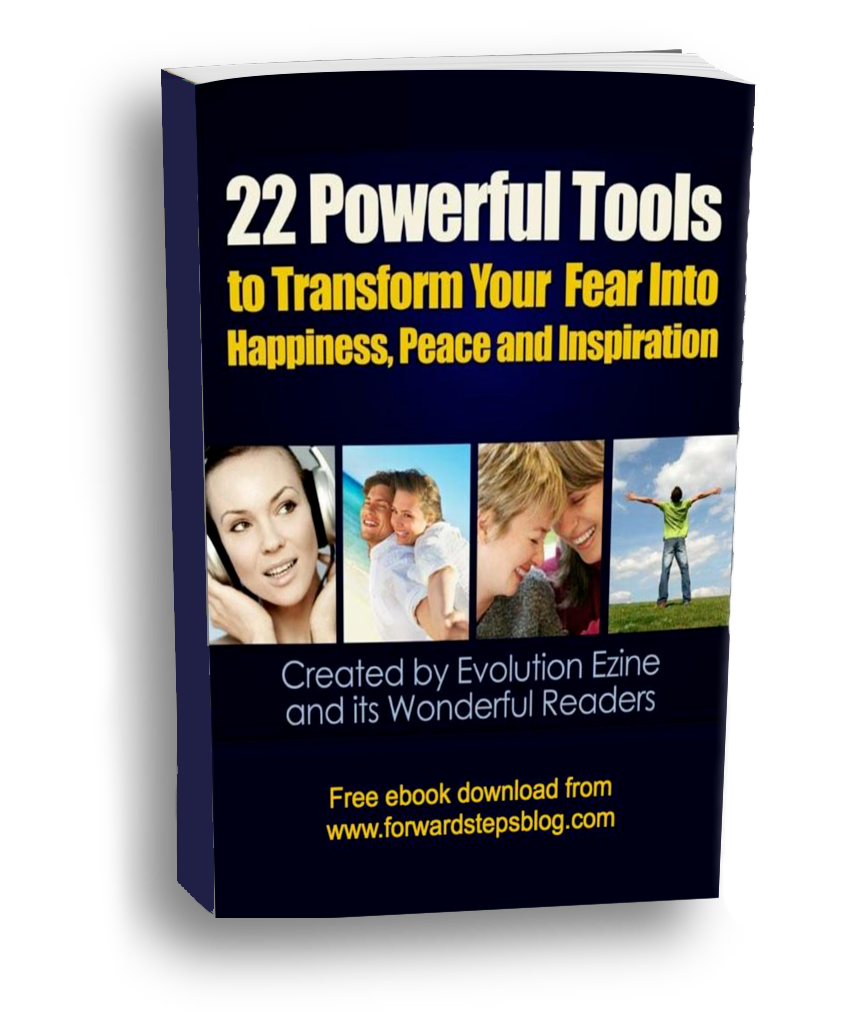
Want some simple ways to feel more at ease?
Download the free 22 Tools To Transform Your Fear and discover simple techniques that can help you to transform your fear into more empowering feelings.
How Do You Respond When Fear Holds You Back?
8 questions. Explore how you respond to fear, what may be keeping you stuck and which forward step could help you move ahead.
The Fear Observer
You are inclined to understand a fear before deciding what to do about it. You recognise that identifying what you feel, when it appears and what seems to trigger it can give you useful information about your responses.
Your strength is your willingness to look inward rather than automatically react. Writing down a fear in a journal can help you put vague worries into words and separate what you know from what you imagine might happen.
Your next step is to choose one recurring fear and write down when it appears, what you feel and what you would like to understand about it. You do not have to solve everything in one sitting.
For practical ideas to help you work with fear, explore the free 22 Tools to Transform Your Fear eBook.
The Belief Questioner
You are inclined to examine the thoughts and assumptions that accompany fear. You may recognise that an expectation of failure, rejection or embarrassment can influence your decisions even before you know what will actually happen.
Your strength is your willingness to question your own conclusions. A limiting belief may feel convincing without being the whole truth. Looking at the evidence, considering other explanations and remembering what you have managed before can give you a more balanced perspective.
Your next step is to write down one fearful prediction. Ask yourself what evidence supports it, what evidence challenges it and what else could happen. Aim for a realistic view rather than forcing yourself to think positively.
For practical ideas to help you work with fear, explore the free 22 Tools to Transform Your Fear eBook.
The Comfort Zone Protector
When fear appears, you may be inclined to postpone a decision, choose the familiar option or keep your distance from situations that feel uncertain. This response can offer short-term relief, especially when you are unsure what to expect.
Your strength is that you are attentive to your sense of safety and the possible consequences of your choices. The useful question is whether avoiding a situation is genuinely protecting you from a real risk or keeping you away from something that matters to you.
Your next step is to choose a low-risk situation you have been putting off. Consider what makes it uncomfortable and whether there is a small, sensible action you could take. You can respect genuine limits while still giving yourself room to grow.
For practical ideas to help you work with fear, explore the free 22 Tools to Transform Your Fear eBook.
The Courage Builder
You are drawn towards taking action even when fear has not completely disappeared. You may understand that waiting to feel perfectly confident can keep an important goal just out of reach.
Your strength is your willingness to practise courage through action. Small, manageable steps can help you gain experience, learn from what happens and build confidence over time. Courage does not require reckless decisions or ignoring genuine danger.
Your next step is to identify one meaningful action you have been delaying and make it smaller. Decide what you can reasonably do today, then take that step at a pace that feels challenging without being overwhelming.
For practical ideas to help you work with fear, explore the free 22 Tools to Transform Your Fear eBook.
The Practical Planner
You tend to respond to fear by thinking through the situation and working out what might help. Preparation, useful information and a clear plan can make an uncertain task feel more manageable.
Your strength is your practical approach. You can turn a vague worry into specific questions, identify resources and consider different ways forward. The main thing to watch is whether planning is helping you take action or becoming a reason to postpone it indefinitely.
Your next step is to make a short plan for one situation that worries you. Identify the first action, what you need to prepare and when you will take that action. Leave room to learn and adjust as you go.
For practical ideas to help you work with fear, explore the free 22 Tools to Transform Your Fear eBook.
Explore This Idea Further
Optional prompts to help you make the ideas your own.
I use AI as a thinking companion, not as a replacement for my own thinking. These prompts are simply another way to explore the ideas in this article and see how they might apply to your own life.
You don’t have to use AI to benefit from them. You can copy a prompt into a notebook, write about it in your journal, talk it through with someone you trust or simply sit with the question and see what comes up for you. If you do use ChatGPT or another AI tool, treat its responses as a starting point for your own thinking.
You remain the person who decides what is useful and right for your life.
How to use these prompts: Choose the one that appeals to you, copy the complete prompt and paste it into ChatGPT or another AI tool. You can answer its questions and continue the conversation as you go.
1. Apply This To My Life
Use this prompt when you want to connect the article’s ideas about fear with a situation in your own life and find a constructive way forward.
I’ve just read the Forward Steps article “Making Fear Your Friend.” Use that article as your primary source and help me understand how I can work with a fear I am experiencing rather than automatically allowing it to hold me back.
Ask me a few relevant questions about what I am afraid of, how it affects my choices and what I would like to do if the fear felt more manageable. Then help me connect the article’s ideas about understanding fear, recognising what it may be telling me and using it as an opportunity to move forward with my own circumstances.
Help me distinguish between a fear that may be warning me about a genuine risk and one that may be preventing me from doing something worthwhile. Offer thoughtful, practical guidance based on the article and my answers. Build on our conversation as we go rather than giving me one large response and stopping.
2. Reflect More Deeply
Use this prompt when you want to explore how fear influences your beliefs and choices and what you might learn by responding to it differently.
I’ve just read the Forward Steps article “Making Fear Your Friend.” Help me explore how fear may be influencing my beliefs, choices and willingness to grow in ways I have not fully considered.
Use the Forward Steps article as your primary source. Guide me through a thoughtful conversation about how past experiences, memories and expectations about the future may shape what I fear today. Help me consider whether I tend to avoid uncomfortable situations, react defensively or use other ways of dealing with fear that may prevent me from moving forward.
Ask me one or two useful questions at a time and build on my answers. Help me recognise patterns in how I respond to fear, question whether my beliefs are helping or limiting me and consider what might change if I faced a fear instead of automatically backing away from it. Encourage honest reflection without judging me or assuming every fear is unreasonable. Keep the conversation grounded in the article’s message about recognising fear, understanding it and learning to make it a friend.
3. Turn It Into Action
Use this prompt when you are ready to choose one manageable way to face a fear and take a practical step towards something that matters to you.
I want to stop letting fear automatically decide what I do or avoid. Help me choose one manageable way to face a fear and take a step towards personal growth, using the Forward Steps article “Making Fear Your Friend” as your primary source.
First, ask me a few relevant questions about a fear that is holding me back, what I would like to do differently and what makes the situation challenging. Help me identify whether the fear relates to a past experience, an expectation about the future or a belief that may be limiting me.
Then help me choose one practical step that feels challenging yet manageable. Drawing on the article’s suggestions, consider whether writing down my fear, examining how I respond to it or doing something small that stretches my usual boundaries could help me move forward. Help me make a simple plan for taking that step and deciding what I can learn from the experience.
Keep the plan realistic and focused on one action rather than pushing me to confront everything at once. Help me distinguish sensible caution from avoidable hesitation, and remind me that progress does not require perfection. Build on my answers as we continue and help me finish with one clear, achievable step.
Tip: You don’t have to use all three. Start with the one that feels most useful to you right now.

Hi, I'm Thea Westra at Forward Steps (forwardstepsblog.com)
CLICK HERE To Trigger More Of Those Forward Steps 'Aha' Light Bulb Moments!